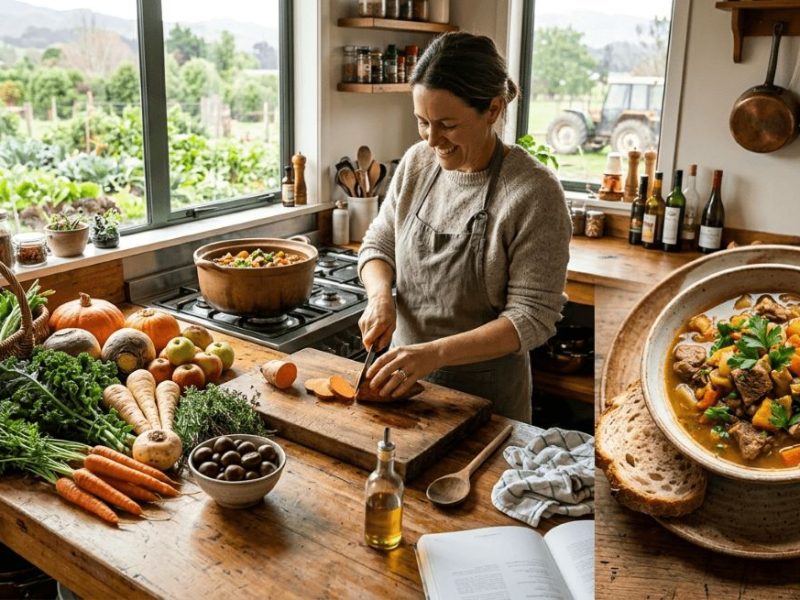
Cooking With New Zealand’s Seasonal Produce From Paddock to Plate

New Zealand’s food story begins long before it reaches your kitchen. It starts in rich volcanic soil on the North Island, in frost-kissed paddocks near Southland, and in the sun-drenched market gardens of Hawke’s Bay. Eating with the seasons in this country is not a trend. It is the most natural way to cook. When you align your meals with what is actually growing right now, something shifts. The flavours become sharper. The preparation becomes simpler. And the whole experience of feeding yourself, or a table of people you care about, starts to feel grounded in something real.
From the Paddock
New Zealand’s agricultural calendar is one of the richest in the Southern Hemisphere. Autumn brings a wave of root vegetables, brassicas, and orchard fruits that transform how you cook at home. NZ AgriFood Week tracks these growing cycles and connects them to regional producers. Eating what is in season is not just better for flavour. It supports local growers, reduces food miles, and makes weeknight cooking genuinely easier.
What New Zealand’s Autumn Harvest Looks Like Right Now
April in New Zealand signals a significant shift. Summer’s stone fruits and salads give way to something more substantial. Kumara is coming out of the ground in Northland and Gisborne. Pumpkin and butternut squash are arriving from Waikato and Canterbury. Brassicas like broccoli, cauliflower, and kale are beginning their best season in the cooler South Island air. Feijoas are dropping from backyard trees all over the country, and apples from Central Otago are at their peak.
NZ AgriFood Week documents exactly this kind of shift through its coverage of the country’s agricultural calendar. The platform highlights what is growing, where it is growing, and the producers behind it. For home cooks, this information is genuinely useful. It tells you what will be freshest at the farmers market, what the supermarket is actually sourcing locally right now, and what meals will cost the least to cook well.
The Vegetables Leading This Season’s Plate
Autumn vegetables in New Zealand deserve more attention than they typically get. Most home cooks know how to roast a pumpkin. Far fewer know what to do with celeriac, Jerusalem artichokes, or purple sprouting broccoli. These are the kinds of vegetables that reward you when you give them a little time.
Root vegetables love low heat and long cooking. A parsnip roasted at 180 degrees for 45 minutes becomes nutty and almost sweet. Beetroot wrapped in foil and baked whole is a different ingredient entirely from the stuff in a tin. Leeks sliced and cooked slowly in a little butter turn silky and mild, making them one of the most versatile bases for autumn cooking.
For anyone building a habit of cooking more vegetables from scratch, good vegetable cooking techniques matter as much as the vegetables themselves. Knowing how to caramelise onions properly, how to blanch greens without losing their colour, and how to roast root vegetables so they brown rather than steam, these are the skills that make seasonal eating actually enjoyable rather than a chore.
Eight Autumn Vegetables Worth Adding to Your Weekly Rotation
If you are looking for a starting point, this list covers the vegetables most widely available across New Zealand right now and gives you a clear sense of how to put each one to work.
- Kumara: Roast whole, mash with butter and ginger, or slice thin and layer in a gratin. The red variety is sweeter. The orange variety is earthier and more filling.
- Pumpkin: Soup, roasted wedges, or stirred through pasta with brown butter and sage. Toast the seeds too. A little salt and oil in the oven transforms them.
- Parsnip: Roasted or pureed. Pairs beautifully with anything smoky or spiced. Often overlooked, never disappointing.
- Beetroot: Roast whole in foil, then peel and slice. Serve warm with goat cheese or cool with orange and walnut.
- Leeks: Slow-cooked in butter as a side dish, or used as an aromatic base for soups and braises. A quiet hero of the autumn kitchen.
- Silverbeet: Wilted in garlic and olive oil. Or chopped into frittatas, pies, and pasta fillings. It is one of the most forgiving greens you can cook with.
- Broccoli: Roasted at high heat until the edges char. Far better than steamed, and far more flavourful. The florets catch the heat and concentrate their sweetness.
- Celeriac: Grated raw into a remoulade, or roasted in chunks alongside chicken or lamb. Its celery-like depth adds real character to simple dishes.
How NZ AgriFood Week Connects Growers to Home Kitchens
The gap between what grows in New Zealand and what ends up on weeknight dinner tables is often wider than it needs to be. Most people know in theory that eating local and seasonal is a good idea. Fewer have a practical way to act on it consistently.
NZ AgriFood Week works to close that gap. Its coverage spans the length of the country, from Northland kumara farmers to Canterbury vegetable growers, from Hawke’s Bay orchardists to Southland sheep and beef producers. The platform gives readers a window into the agricultural rhythms that shape what is available in their region at any given time of year.
For home cooks, this kind of information changes how you approach a weekly shop. Instead of buying whatever looks convenient, you start asking what is actually in season. And once you know that, finding the right thing to cook becomes much simpler. Browsing seasonal produce recipes organised by what is currently available is one of the most practical ways to translate that knowledge into actual meals on a Tuesday night.
Turning Garden Yields Into Weeknight Dinners Without Overcomplicating It
One of the most common mistakes home cooks make with seasonal vegetables is overthinking the preparation. Fresh, in-season produce does not need much done to it. The flavour is already there. Your job is mostly to get out of the way.
A few principles that make this easier:
- High heat brings out sweetness in almost every root vegetable. Roasting is your most reliable method, and the results are consistently better than boiling.
- Acid brightens vegetable dishes. A squeeze of lemon or a splash of good vinegar at the end changes everything. It lifts the whole plate.
- Fat carries flavour. Olive oil, butter, or good-quality animal fat helps seasonal vegetables taste like themselves, only better.
- Salt early. Vegetables that are seasoned during cooking, not after, absorb flavour more deeply. This is especially true when roasting.
- Texture matters. Mix soft with crunchy. A roasted vegetable alongside something raw and crisp is more interesting to eat, and more satisfying too.
These are not complicated ideas. They are the foundations of cooking that feels effortless, because the produce is doing most of the work for you.
What Seasonal Shopping Changes in the Way You Think About Food
There is a real difference between buying food and buying ingredients. Seasonal shopping pushes you toward the second category. When you pick up a bunch of silverbeet because it is exactly right for this moment in autumn, you are already thinking about what it could become. That is a different mindset from grabbing a bag of pre-washed salad mix out of habit.
Seasonal cooking also makes you more adaptable. When you get used to working with what is available rather than what a recipe demands, you stop being fixed on specific ingredients. You learn that celeriac can stand in for potato in most contexts. That silverbeet and spinach are largely interchangeable. That the cooking technique matters more than the exact vegetable in the bowl.
NZ AgriFood Week’s documentation of regional growing seasons gives home cooks the framework to build this kind of flexibility over time. The more you understand New Zealand’s agricultural calendar, the more intuitive your cooking becomes.
NZ Autumn Seasonal Vegetables at a Glance
This overview covers the vegetables most available across New Zealand’s autumn and points to simple approaches that work well for each one.
New Zealand Autumn Produce, Seasons, and Best Cooking Methods
| Vegetable | Peak Season | Best Cooking Method | Pairs Well With |
|---|---|---|---|
| Kumara | March to June | Roasting, mashing | Ginger, lime, coconut |
| Pumpkin | April to July | Roasting, soups | Sage, blue cheese, chilli |
| Parsnip | May to August | Roasting, pureeing | Apple, thyme, cumin |
| Broccoli | April to September | High-heat roasting, stir-frying | Garlic, anchovies, lemon |
| Celeriac | May to August | Roasting, raw grating | Mustard, parsley, pork |
| Silverbeet | Year-round, best in autumn | Wilting, baking into pies | Ricotta, nutmeg, pine nuts |
| Beetroot | March to July | Foil-baking, roasting | Goat cheese, orange, walnut |
Where the Paddock Ends and Your Plate Begins
The paddock-to-plate idea can sound like marketing language. In New Zealand, it is actually a description of a short, traceable distance. The broccoli at a Christchurch farmers market may have been cut yesterday. The kumara at a Northland roadside stall was likely in the ground a week ago. That proximity is rare in the global food system, and it is worth using.
NZ AgriFood Week makes the case, consistently and with real depth, that understanding where food comes from changes how you value it. And when you value your ingredients, you cook them better. You waste less. You plan around what is available rather than forcing meals from whatever is convenient. The transition from paddock to plate becomes less of a slogan and more of a genuine daily practice.
Start with one vegetable this week. One seasonal thing you have not cooked before. Roast it simply. Taste it on its own. Then build from there. That single habit, repeated across the seasons, adds up to a kitchen that feels genuinely connected to the land it sits on. New Zealand makes that connection easier than almost anywhere else in the world. All you have to do is pay attention to what is growing.

No Comment